
Contact here for Advertising & Partnerships // Support the newsletter here.
Written by David Skilling
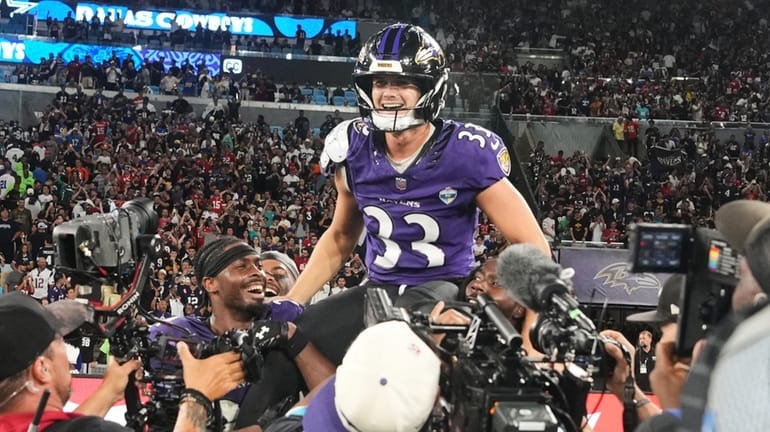
Tyler Loop had no time left to win an NFL game inside one of football’s most famous stadiums. The Baltimore Ravens kicker stood 56 yards from the posts at the Maracanã, struck the ball and watched it sail through. It helped Baltimore beat the Dallas Cowboys; then Loop ran towards the end zone, jumped into the air and performed Cristiano Ronaldo’s Siuuu celebration, and in the Maracanã, the crowd knew exactly what to do.
“Siuuuu.”
It was loud. More importantly, it was completely instinctive. An American had just won an American football game with his right foot, inside the Maracanã, then borrowed the celebration of one of association football’s most famous players. More than 72,000 people in Brazil understood the reference immediately and joined in.
For me, those few seconds said more about the NFL’s night in Rio than almost anything the league could have planned.
The NFL has very obvious reasons for being in Brazil. It estimates the country has more than 36 million NFL fans and has committed to staging at least three regular-season games in Rio over five years; with a population of over 200 million people (who love sports), it makes a lot of sense. Sunday’s game was the third NFL regular-season game in Brazil after two years in São Paulo, but taking the league to the Maracanã was different.
Few stadiums around carry so much history. World Cup finals have been played there, Pelé scored his 1,000th career goal there, and the iconic teams Flamengo and Fluminense call it home. Brazilians don’t need to be taught what the Maracanã represents before somebody turns up with another sport.
The NFL was effectively walking into somebody else’s house, but what I liked about Sunday was that it didn’t seem particularly interested in pretending otherwise.
Péricles performed the Brazilian anthem, and people sang it around the stadium. During the third quarter, Evidências, the Chitãozinho & Xororó song that has effectively become a Brazilian mass singalong, came over the speakers and thousands joined in. Brazilian artist Pedro Sampaio also performed alongside Ricky Martin at half-time.
The stands were interesting too. Cowboys and Ravens jerseys mixed with shirts from Flamengo, Vasco, Fluminense and Botafogo, with fans arriving from different Brazilian states and other countries wearing shirts from NFL franchises that weren’t even playing. I’ve been to NFL London before and experienced this; it creates a festival atmosphere around an event locals don’t often get to experience.
WORK WITH CULTURE OF SPORT
We partner with brands, agencies and organisations across sport and culture to create thoughtful editorial stories for our audience.
It looked less like the NFL had temporarily transported an American stadium experience to Rio and more like Rio had decided what an NFL game at the Maracanã should look like.
With international sports expansion, there's a temptation to judge success by whether the visiting product can reproduce its home atmosphere somewhere else. I think that’s slightly backwards. If you’re going to Brazil, why would you want the experience to feel exactly like Baltimore or Dallas? While the culture of the United States is absolutely the focus of the experience, it’s also interesting to see what gets added.
Cowboys cheerleaders danced to Brazilian music and performed the celebration associated with Lucas Paquetá. Neymar was there and received a personalised Cowboys jersey, and after Baltimore won, samba played around the stadium, and even the pre-game mosaic, featuring Lamar Jackson and Dak Prescott, carried the words “O Rio Também Joga”: Rio plays too.
Ravens safety Kyle Hamilton talked afterwards about how much the Brazilian national anthem had struck him. “I’ve got to learn that Brazilian national anthem,” he said. “That was crazy, " while Lamar Jackson described the atmosphere as “wonderful”.
The NFL’s international strategy is obviously commercial; Brazil isn’t being visited because Roger Goodell enjoys caipirinhas. Nine international games are scheduled this season as the league continues to look beyond the United States for audience growth, media value, sponsorship, and eventually whatever larger international structure follows.
That expansion does bring some tensions though. Before Sunday’s game, the NFL Players Association raised concerns about the Maracanã pitch after heavy rain in Rio and complaints from Brazilian footballers about its condition. The NFL took control of the stadium a week before the game and reinforced the surface with synthetic fibre.
Afterwards, players and coaches from both teams said the pitch hadn’t really affected the game, but the concern still gets at something the glossy international-expansion story can sometimes skip over: taking regular-season NFL games around the world means asking players to compete in buildings, climates and conditions that weren’t designed around the league. Commercial expansion works as long as the football itself remains credible.
Rio got lucky in that respect, because the football was great. Dallas trailed by 11 before scoring 15 unanswered points. Baltimore went back ahead with around 90 seconds remaining. The Cowboys tied it again with seven seconds left, apparently sending the game towards overtime, and seven seconds were enough.
Jackson found Zay Flowers; Baltimore called a timeout with a second remaining, and Loop came out for the kick. He hadn’t even been warming up because he didn’t expect to get the opportunity, but it went through from 56 yards.
The original celebration plan had apparently been a football-style knee slide. Loop decided against it because he thought he’d end up falling over, so somewhere between making the biggest kick of his NFL career and reaching the end zone, he changed his mind.
“When in Brazil, man,” he said afterwards.
Strictly speaking, Cristiano Ronaldo isn’t Brazilian, which somehow makes the whole thing better. The iconic Siuuu celebration doesn’t just belong to Ronaldo anymore. Kids do it in school playgrounds, athletes use it in other sports, and the crowd on Sunday inside the Maracanã didn’t need anything explaining.
That’s the bit of international sports expansion that leagues can’t manufacture. The NFL can choose Rio, rent the Maracanã, sell the tickets, build the fan events, book Brazilian musicians and put local references around the stadium. All of that helps create the conditions.
It can’t write Tyler Loop making a 56-yard field goal with one second remaining, deciding to celebrate like Ronaldo and an entire futebol stadium roaring the celebration back at him. I think it’s a beautiful example of today's sports world, where cultural crossovers help fans of all sports understand each other a little better.
This coming Sunday, I’ll be at the NFL’s London game, where the league’s international story is at a very different stage. London has hosted regular-season NFL games since 2007, long enough that an NFL weekend feels like part of the natural sporting calendar.
I’ll be writing about that too.
Thanks for reading. If you hit the like button, you’ll be doing me a huge favour.
David Skilling: Follow on Instagram
