Inside FIFA’s $1.25 Billion Club World Cup Plan: Prize Money, Power Shifts, and the Global Game’s New Battleground
How FIFA’s record-breaking Club World Cup fund is redrawing the lines of global football influence, and why the money matters far beyond the pitch.
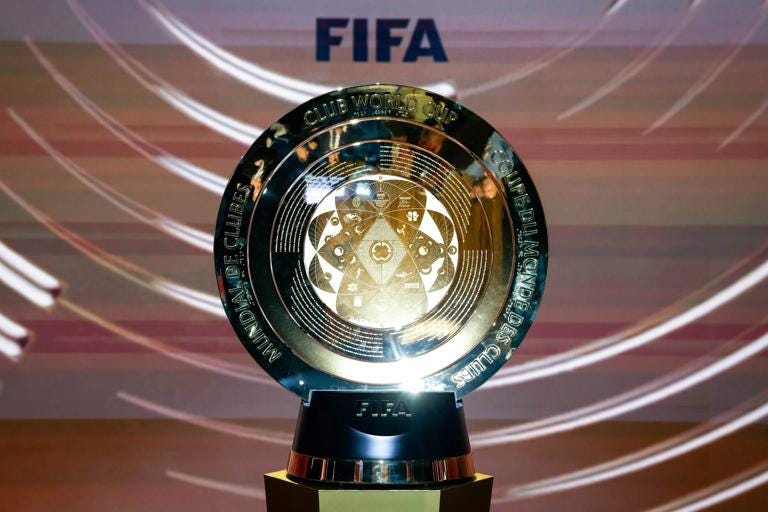
When FIFA announced a $1.25 billion financial package for the 2025 Club World Cup with up to $125 million for the winners, it didn’t just send a signal. It fired a warning shot across the bow of European football’s power players and reminded the rest of the world that the game’s future is up for grabs.
For decades, FIFA’s relationship with elite club football has been complicated. UEFA and Europe’s top leagues have long held the commercial keys, think Champions League glamour, Super League tensions, and billion-dollar domestic rights deals. But now, FIFA is coming for a slice of that club dominance, and it’s doing so by throwing serious money at the problem.
At the heart of the plan is a staggering $1 billion prize money pool for the 32 participating teams. That alone makes it the most lucrative club football tournament in history. But the breakdown tells a more strategic story.
There are two components: a performance-based prize pool worth $475 million, and a participation pillar totalling $525 million. The former rewards wins and progression - group stage victories bank you $2 million each, and if you go all the way, it can stack up to $125 million. The latter compensates clubs simply for qualifying, with payouts based on regional representation.
European clubs, unsurprisingly, stand to earn the most in this category: between $12.81 million and $38.19 million per team. South American clubs follow at $15.21 million. Meanwhile, clubs from Africa, Asia, and CONCACAF receive around $9.55 million, with Oceania trailing at $3.58 million.
It’s a payment structure that reflects football’s current global imbalance but also quietly nudges the game toward something more inclusive.
The Club World Cup has long been dismissed as a glorified exhibition but is now reimagined as a true global theatre. A 32-team, month-long tournament in the United States, echoing the scale of the men’s World Cup. And this time, the stakes are very real.
By throwing down a billion-dollar gauntlet, FIFA is attempting to do something that hasn’t been done since the early days of the Champions League: make intercontinental club football feel like a must-watch. Not just for fans, but for sponsors, broadcasters, and, crucially, players.
And here’s the real kicker: FIFA isn’t pocketing any of it. According to the president, Gianni Infantino, every cent will be reinvested in club football. Their own reserves remain untouched, a move clearly designed to silence critics who accuse FIFA of self-interest.
But of course, FIFA doesn’t need to profit directly to benefit. This is about influence.
Follow me for more sports and life updates: Instagram
Let’s be clear: the Club World Cup is not a gift to global football. It’s a calculated power play.
For years, FIFA has watched as UEFA strengthened its stranglehold on elite football. The Champions League is a global behemoth. The European Super League, despite public backlash, revealed a hunger among top clubs for more control and more cash. This Club World Cup is FIFA’s counter-punch in many ways, offering elite clubs a mega-payday without handing over the keys to private capital.
It’s not just about the winners. The $250 million “solidarity fund” that sits alongside the prize pot is where FIFA plays the long game. This money will be distributed to clubs outside the 32 participants, a move designed to keep the rest of the football pyramid invested in FIFA’s vision. The message is clear: this isn’t just for the elites. Everyone eats.
Yet, critics are asking: will this money genuinely flow to the grassroots game? Or will it vanish into the same power structures that have always controlled the sport?
We’re living in a moment where football is being reshaped by money, influence, and identity.
Just look at what Saudi Arabia is doing in club football. Look at the MLS landing Messi. Look at how Premier League clubs are globalising their brands through fashion collabs and social media plays. Football isn’t local, and this new Club World Cup is designed for that reality.
There’s certainly a cultural hunger for seeing a club like Flamengo go toe-to-toe with Manchester City. To see how other continental giants test themselves against the household names of Europe. And with the 2025 tournament being hosted in the US, a country that’s betting big on football’s future and a fanbase increasingly hungry for authentic global matchups on home soil, once past the group stages, it should heat up.
With that said, new ventures like this always come with risks.
One concern is getting people into the stadiums if fans are priced out. This is not the World Cup. It doesn’t have the same draw as the World Cup even with die-hard fans, and it’s in the U.S where the casual interest needs to be met with ticket prices that match that interest level. We’ll have to see how it pans out, but early signs haven’t yet been positive for full stadiums.
Also, jamming another mega-tournament into an already-bloated calendar raises questions about player fatigue. Managers will grumble about the overuse of their players, and fans, particularly in Europe, may resist the idea of a tournament that could lead to losing players to injury just before the start of the new season.
But over time, money talks. Especially when it’s backed by smart packaging, elite talent, and growing commercial interest. If FIFA gets the format, storytelling, and cultural resonance right, this could eventually become a rival to the Champions League.
And crucially, it gives clubs from outside Europe and South America a rare stage to showcase their value. In today’s football economy, visibility often dictates viability. This tournament offers both.
What FIFA is offering with the 2025 Club World Cup isn’t just a massive payout; it’s a repositioning of power. It’s a reminder that global football doesn’t begin and end in Europe, and that with the right incentives, the world’s best clubs might just look beyond UEFA for a future stage. The accountants certainly will.
Whether it works or not will depend on more than money. It’ll come down to storytelling, spectacle, and the kind of cultural weight that makes people care. But make no mistake: the game is changing. And this time, FIFA is attempting to drive the narrative.
Thank you for reading, David Skilling.
SPORTEL Miami 2025 Recap: A Global Sports Business Powerhouse
It was an honour for my business to be a media partner for the Sportel Miami Event. The first stop of the 2025 SPORTEL season landed in Miami, bringing together 350 participants from over 200 companies across 37 countries. Held on 1–2 April, the event confirmed Miami’s status as a key hub for sports media and tech, uniting broadcasters, leagues, streamers, rights holders, and tech disruptors.
Kicking off with a rooftop opening party and a live painting by acclaimed sports artist Lili Cantero, the two-day summit delivered high-impact networking and forward-thinking panels on AI, streaming, sponsorship, and more. With nearly half of attendees at C-level and a third of them content buyers, SPORTEL Miami proved once again to be a deal-making hotspot.
Notable highlights included the Pitch Perfect startup showcase, won by Blinkfire’s Johnny Kutnowski, and deep dives into the expanding US sports media market and the growing transatlantic play by European football leagues.
Bringing together North and Latin America with the global sports media and tech ecosystem under one roof, SPORTEL Miami reaffirmed its role as a strategic gateway between these markets, fostering meaningful connections, sparking new collaborations, and providing a key platform in today’s fast-evolving landscape.
"While SPORTEL’s schedule for 2026 is currently preparing, we remain committed to creating fresh opportunities through our international spring events. We are actively working on new destinations and event concepts to further expand SPORTEL’s reach and continue delivering unparalleled value to our global community, wherever we go," concluded Laurent Puons, Managing Director of Monaco Mediax.
I first visited a SPORTEL conference in 2016 in Monaco, and it’s great to see it continue to grow. Next up, Monaco (October). I hope to see you all there.
SAVE THE DATES:
SPORTEL Monaco: 20-22 October – www.sportelmonaco.com
SPORTEL Awards Monaco: 19-21 October: www.sportelawards.com
SPORTEL Press Service – media.sportel@monacomediax.com


Follow me on LinkedIn | X | Instagram
If you hit the like button, you’ll be doing me a huge favour, and if your business needs sports writing, feel free to get in contact.
If you know someone who will enjoy this article, please share it with them.


